


Brain Test 3: Tricky Quests
4.72.09K Reviews
App Specs
- Version
- 1.81.0
- Updated On
- License
- Free
- Downloads
- 10,000,000+
- Developer
- Unico Studio
- Categories
- Trivia
- Platform
- Android, iOS
Screenshots
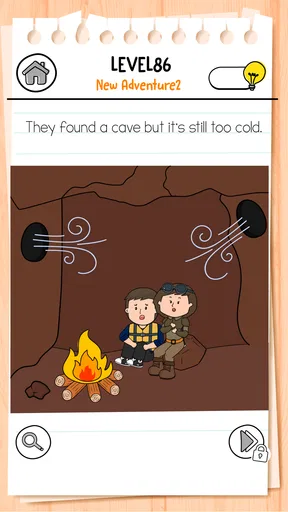

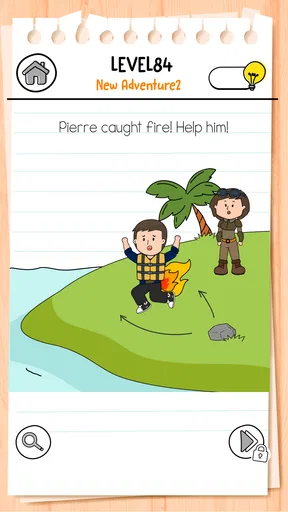
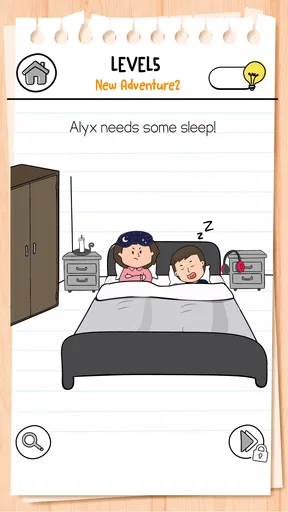
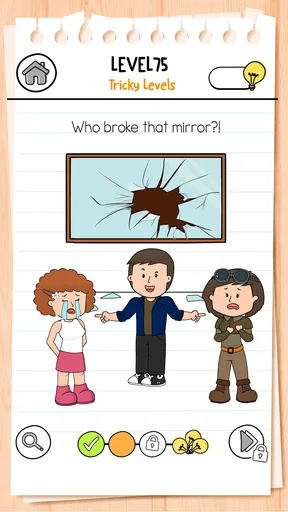
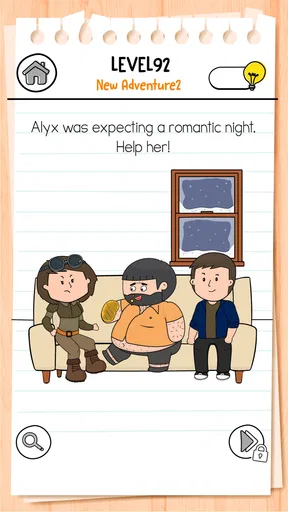
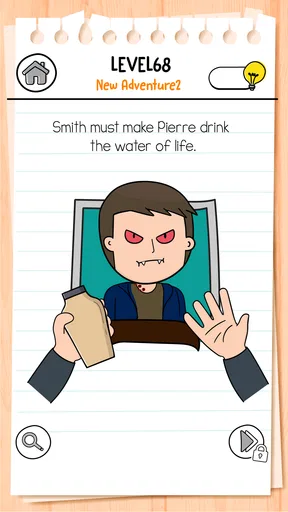
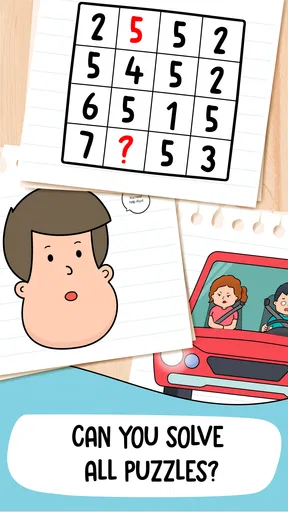
 Analysis by AppCompare
I find Brain Test 3: Tricky Quests works best when I treat it as a playful puzzle adventure rather than a test of formal trivia knowledge. Its appeal is the way it asks me to inspect a scene, question the obvious answer and try a less conventional move. That makes it a handy choice for a short break, though its surprises can be a mixed blessing if I want calm, predictable puzzles.
What you are paying for—and what you are not
Unico Studio offers this trivia game for free, with optional in-app purchases listed from $0.99 to $6.99 per item. That gives me a clear starting point: I can try the game without an upfront purchase, while spending is a separate choice. I would decide whether to buy anything based on my own experience of the game rather than assuming a purchase is needed to enjoy it.
The purchase range alone does not explain what each item contains or how it affects progress, so I would not treat it as a promise of a particular advantage. If you are careful about spending, check the purchase details on your device before confirming anything, and avoid buying in a hurry just because a puzzle has you stuck. The game is rated Everyone, and its 4.7 average from around 382,000 ratings suggests it has found a broad audience, though a high average cannot tell you whether its style suits your taste.
A good fit for brief, interrupted play
The quest structure gives the puzzles more of a through-line than a set of unrelated brainteasers. I like that when I want a little sense of momentum, but it also means the game may be less satisfying if I only want a plain collection of logic questions. The story is part of the flavor, not a substitute for solving the challenges, so the main attraction remains figuring out what each scene is asking me to do.
For an everyday example, I might open it while waiting for a delayed appointment, solve a puzzle or two, then put my phone away when my turn comes. That stop-and-start use is more realistic than planning a long session: the game’s individual challenges invite short bursts, while a tricky level can hold me longer than expected. If you are sharing a quiet moment with a friend, passing the phone back and forth to suggest solutions can make the odd logic more entertaining, but it is still a single-player-style puzzle experience rather than a dedicated party quiz.
How it compares with other puzzle choices
Compared with a standard trivia quiz, this leans less on recalling facts and more on interpreting what is on screen. If you enjoy timed questions about general knowledge, a conventional quiz will be a better match. Compared with a minimalist logic-puzzle app, Brain Test 3 feels more playful and story-led; that variety can keep me curious, but it can also make a solution feel less systematic than solving a number grid or a carefully constrained deduction puzzle.
That difference is worth knowing before you install it. I would recommend it to someone who enjoys lateral thinking, visual clues and comic misdirection, especially if they do not mind occasionally trying an answer that seems deliberately odd. I would steer a player who wants rigorous, consistently measurable difficulty toward a dedicated logic game instead. Brain Test 3 is aiming for surprise and amusement as much as clean puzzle mechanics, and those priorities will not suit everyone.
Worth Reading Before You Choose

Switching to Android Auto Means Rethinking Your Driving Routine

Google Calendar Makes a Crowded Week Easier to Manage

Baby Panda World Brings Quick Play to Modern Phones, but Its Game Library Feels Busy

ESPN’s Live Game View Makes Following Close Games Easier

QuizzLand Review: A Good Fit for Short Trivia Breaks, Not Every Player

Basketball Stars: Multiplayer Is Fast, but Can It Recover When Matches Go Wrong?
First Impressions
From the moment you launch Brain Test 3: Tricky Quests, it greets you with a vibrant, quirky design that screams fun. The interface is clean and intuitive, making it super easy to dive right into the action. What's really cool is how the game doesn't take itself too seriously. The developers have sprinkled a generous dose of humor throughout, which keeps things light and entertaining.
The Gameplay Experience
The game is built around a series of puzzles and quests that test your logic, creativity, and sometimes, your patience. Each level presents a new challenge, and no two puzzles are the same. You'll find yourself solving riddles, unraveling tricky scenarios, and even completing some rather unexpected tasks. It's like a wild ride where you never quite know what to expect next.
One thing I love about the gameplay is how it encourages you to think outside the box. Sometimes the solutions are straightforward, but more often than not, you'll need to twist your brain in ways you didn't think possible. It's a game that rewards creativity and lateral thinking.
Features to Love
One of the standout features of Brain Test 3: Tricky Quests is the variety of puzzles. Whether you're a fan of wordplay, logical reasoning, or visual challenges, there's something here for everyone. Plus, the game continuously updates with new levels, so there's always a fresh challenge waiting for you.
The hint system is another highlight. If you ever find yourself stuck, you can use hints to nudge you in the right direction. It's a nice touch that helps maintain the game's flow without making it too easy.
Making hints work for you
I get more value from a hint when I pause before using one. First I identify the objects or details that seem unusual, then I try one or two plausible interactions rather than tapping randomly. That small routine keeps a difficult puzzle from turning into guesswork and makes a hint more useful as a nudge than as a shortcut. If I am still stuck, I would rather use help and move on than let one level sour the whole session.
There is a trade-off: hints can keep the story moving, but using them too quickly can remove the satisfying moment of spotting the trick. I also would not assume that the hint system is unlimited or that every clue works the same way; I would check what the game shows in the moment before planning a long session around it. The practical approach is to treat hints as a reserve for genuine dead ends, especially if you are playing casually and do not want to turn a five-minute break into a frustrating search.
Progress without turning it into pressure
Because puzzles can vary in style, I find it useful not to judge my ability by how quickly I clear a level. A visual trick may click instantly while a word-based clue takes longer, and that uneven rhythm is part of the design’s charm as well as a source of friction. If you are playing with a child or someone new to these games, taking turns explaining what each person notices can make the challenge collaborative without needing to race through it.
For longer stretches, I would set a natural stopping point after a quest or a few levels instead of chasing completion. That is particularly sensible when a puzzle is starting to feel arbitrary: a short break can reset your perspective, whereas repeated tapping tends to make the same details blur together. The game is better suited to curiosity than to a high-pressure score chase, so there is little reason to turn every obstacle into a test of speed.
What fairness means in a solo puzzle
There is no need to compare puzzle-solving ability with other players to get something out of this experience. The challenge is personal: interpreting the scene, testing an idea and deciding whether to ask for a hint. That makes it a gentler alternative to competitive trivia when I want a mental diversion without a leaderboard or a timed contest shaping the mood.
At the same time, fairness in a puzzle depends on whether the intended trick feels discoverable. Some levels may make me laugh when I see the answer; others may leave me wondering how I was supposed to infer it. That is the central risk of lateral-thinking games, and it is more noticeable here than in a logic puzzle with explicit rules. If you prefer every solution to follow a visible set of constraints, this game may occasionally feel less fair even when the puzzle is designed as a joke.
What the purchase details can and cannot tell you
The game has reached over 10 million installs, and its current version is 1.77.2, with a minimum operating-system requirement of 7.0. Those details are useful for deciding whether it is a well-established download and whether a device can run it, but they do not tell me how a particular purchase changes play. I would check the item description and the payment prompt directly before spending, especially if I am considering a purchase to get past a roadblock.
I also separate the free entry point from assumptions about every part of the experience. A free download does not by itself tell me whether I will encounter interruptions, what optional items do, or whether spending changes the pace. I would make those decisions one at a time, based on what appears in the app and what I actually want, rather than treating a listed price range as a guide to the best way to play.
Where the experience may not fit
If you want puzzles with a steady difficulty curve, clear rules and a single defensible solution, the playful misdirection here may wear thin. The same goes for anyone who dislikes being stuck on a level whose logic only becomes obvious after seeing the answer. I enjoy that “aha” feeling, but I do not think every player will find the wait before it equally rewarding.
It is also not my first pick when I want a quiet, uninterrupted reading experience or a quiz that tests what I already know. The app’s strength is its unusual scenes and unexpected tasks, not a textbook-like progression through facts. If that is what you are after, a conventional trivia title is the more direct option; if you want a quick dose of playful lateral thinking, this is the more distinctive one.
What Makes It Stand Out
In a sea of puzzle games available on the app stores, Brain Test 3: Tricky Quests stands out due to its sheer unpredictability. The puzzles aren't just about finding the right answer; they're about the journey to that answer. You'll laugh, scratch your head, and occasionally groan at the clever tricks the game throws your way.
Another unique aspect is its narrative element. Unlike many puzzle games, this one weaves a story through its quests, adding an extra layer of engagement. It feels more like an adventure than just a series of isolated puzzles, which I think is pretty genius.
Room for Improvement
As much as I enjoy the game, it's not without its quirks. Occasionally, the puzzles can feel a bit too tricky, bordering on frustrating. While the hint system is great, it can sometimes be tempting to rely on it a bit too much. A more gradual difficulty curve would be a welcome addition for new players.
Also, some users have mentioned that the in-app ads can be a bit intrusive. While they're not a deal-breaker, they can disrupt the flow of the game. A small price to pay for a free game, but it's something to keep in mind.
A considered recommendation
Unico Studio’s game was released on April 14, 2021, and its Everyone age rating makes it suitable for a broad audience. I would still choose it based on the player’s patience and taste, not simply the age label: younger players may enjoy the humor, while some will want help interpreting an especially indirect puzzle. The game’s audience is broad, but its particular style is not universal.
For me, the best way to approach it is as a lightweight adventure that rewards experimenting, not as a serious brain-training routine or a factual quiz. It is a good fit for spare moments, relaxed shared solving, and anyone who likes being surprised by a puzzle’s answer. It is less suitable for players who need consistent logic, dislike hints, or would rather avoid optional purchase prompts altogether.
Final Thoughts
All in all, Brain Test 3: Tricky Quests is a delightful blend of fun, challenge, and creativity. It's perfect for those moments when you have some time to kill and want to keep your mind sharp. Whether you're a casual gamer or a hardcore puzzle enthusiast, this game has plenty to offer.
So, if you're ready to dive into a world of brain-bending puzzles and quirky quests, give Brain Test 3: Tricky Quests a try. Just be prepared to think differently and have a blast while doing it!
My trust verdict
My recommendation comes with a clear boundary: I would install it for its playful puzzles and story-shaped progression, not because I expect a predictable quiz or a guaranteed smooth difficulty curve. The rating and install count show that many people have chosen to try it, but neither can guarantee that its particular brand of misdirection will click for you. I would start free, use hints sparingly, and keep purchases deliberate.
For a casual player who enjoys looking twice at a scene, that is a worthwhile proposition. For someone who wants tightly formal logic, a competitive trivia match, or complete clarity about every optional purchase before starting, another game will be a better fit. My verdict is positive, with the honest caveat that its charm depends on enjoying the puzzle’s odd turns rather than expecting every answer to feel inevitable.
Pros
- Engaging puzzles keep players entertained.
- Visually appealing with a colorful design.
- Levels offer increasing complexity and challenge.
- Intuitive controls make gameplay smooth.
- Frequent updates add new content regularly.
Cons
- Some puzzles can be frustratingly difficult.
- In-app purchases can be pricey.
- Advertisements can disrupt gameplay.
- Requires internet for full functionality.
- Limited language options available.
FAQs for Brain Test 3: Tricky Quests
What is Brain Test 3: Tricky Quests about?
Brain Test 3: Tricky Quests is a puzzle game that challenges players with a series of unconventional and mind-bending questions. Unlike traditional quizzes, it requires lateral thinking and creativity to solve riddles and puzzles. Each level presents a unique challenge that encourages players to think outside the box.
Is Brain Test 3 suitable for all ages?
Yes, Brain Test 3 is designed to be family-friendly, making it suitable for players of all ages. Its puzzles range from easy to challenging, ensuring that both kids and adults can enjoy the game. However, younger children might need assistance with some of the more difficult levels.
Does Brain Test 3 require an internet connection to play?
Brain Test 3 can be played offline, making it a convenient option for users who want to enjoy the game without needing a constant internet connection. However, certain features, such as accessing new content or updates, may require an internet connection.
Are there in-app purchases in Brain Test 3?
Yes, Brain Test 3 includes in-app purchases. These typically involve hints or solutions that can help players stuck on challenging levels. While the game can be completed without spending money, purchasing hints can enhance the gaming experience for those looking for extra assistance.
What platforms is Brain Test 3 available on?
Brain Test 3: Tricky Quests is available on both Android and iOS platforms. It can be downloaded from the Google Play Store for Android devices and the Apple App Store for iOS devices. The game is optimized for both smartphones and tablets.


